What is in the spray, what published research says about each component, and where the evidence gaps are.
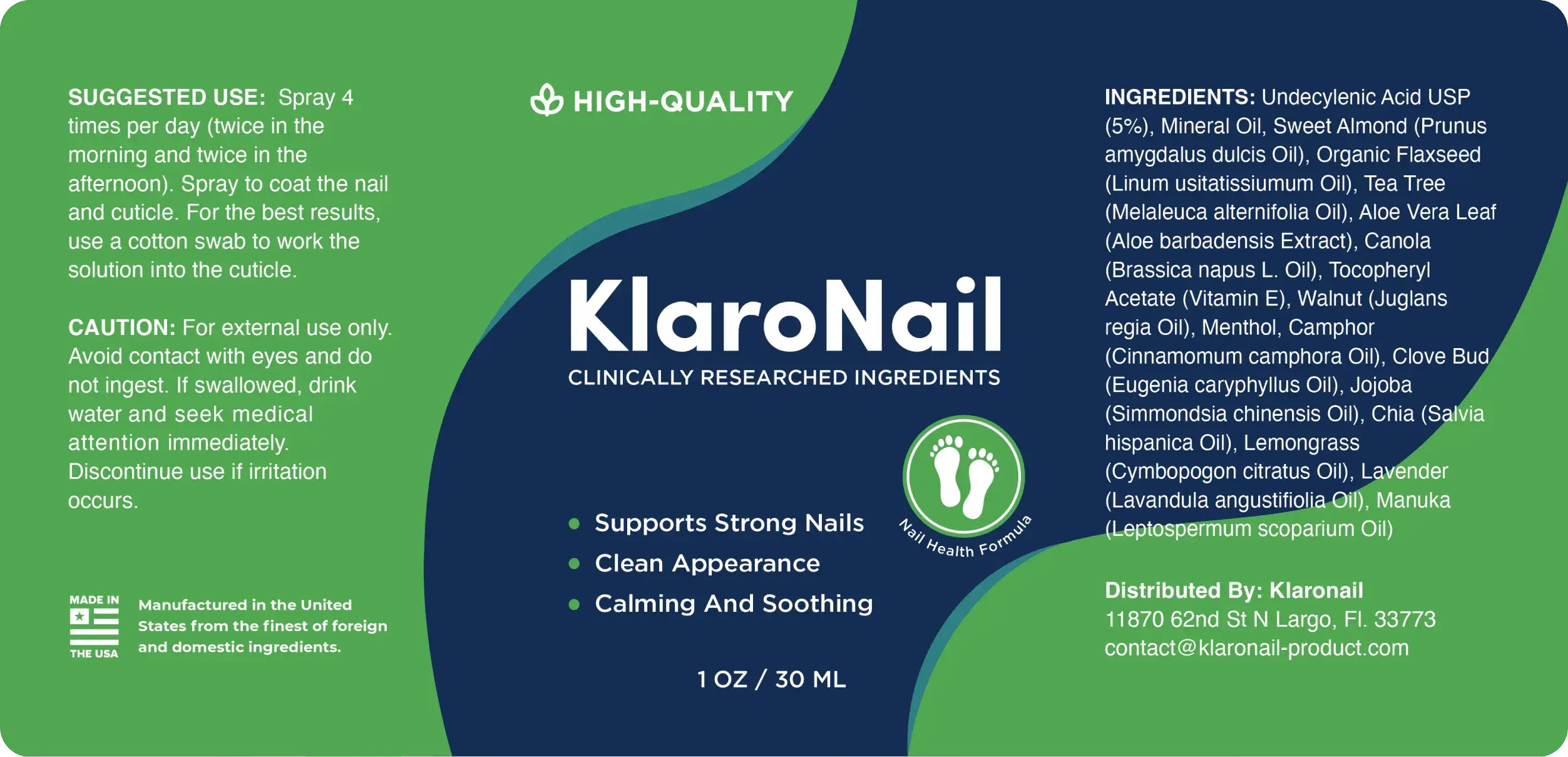
KlaroNail discloses all 13 of its ingredients by name - unusual transparency for the nail-spray category - and this page examines each one: what it is, what published research supports, and what role it plays in the formula. Where solid human research exists we cite PubMed identifiers you can verify; where evidence is laboratory-only or traditional, we say so plainly.
The formula's anchor. An 11-carbon unsaturated fatty acid derived from castor oil, used in OTC antifungal products for over 70 years and included in the FDA's OTC topical antifungal monograph at 10-25% in drug products. Laboratory research shows it disrupts fungal cell membranes and inhibits the yeast-to-hyphae transition in Candida albicans. In KlaroNail it provides the primary antifungal rationale. Concentration in the finished spray is not disclosed. Full guide: Undecylenic Acid Explained.
The best-studied botanical for nail concerns. Distilled from Melaleuca alternifolia, its terpinen-4-ol content drives documented antifungal and antibacterial activity (Carson et al., Clin Microbiol Rev 2006; PMID: 16418522). In the landmark Buck et al. randomized trial (117 patients, 6 months), 100% tea tree oil matched 1% clotrimazole solution on clinical outcomes for toenail onychomycosis (PMID: 8195735). A 2022 systematic review (PMC9274952) found the evidence base promising but limited. Deep dive: Tea Tree Oil for Nails.
One of nature's richest eugenol sources (typically 70-90% of the oil). Laboratory studies show eugenol inhibits Candida species and dermatophyte fungi by damaging cell membranes and suppressing germ-tube formation. On skin it provides a mild warming sensation. High concentrations can irritate; in a blended spray it plays a supporting antimicrobial role.
Lavandula angustifolia oil, rich in linalool and linalyl acetate. Laboratory research supports antifungal activity against dermatophytes and Candida, and lavender is one of the most-studied oils for skin comfort. In KlaroNail it balances the sharper oils and contributes antimicrobial breadth.
Honey from New Zealand's Leptospermum scoparium, distinguished by high methylglyoxal (MGO) content that gives it antibacterial activity beyond ordinary honey - a property extensively documented in wound-care research. As a humectant it draws moisture into the skin around the nail; as an antibacterial it supports a cleaner nail environment.
The polysaccharide-rich gel of Aloe barbadensis, a staple of dermatological soothing with a long research record (Surjushe et al., Indian J Dermatol 2008; PMID: 19882025). Hydrates the nail folds, calms irritation, and offsets the drying potential of alcohol and essential oils in topical formulas.
Tocopherol, a fat-soluble antioxidant reviewed extensively in dermatology (Keen & Hassan 2016; PMID: 27559512). Conditions the nail plate and cuticle, protects skin lipids from oxidation, and supports the flexible-rather-than-brittle keratin that resists cracking.
Cold-pressed Linum usitatissimum oil, one of the richest plant sources of alpha-linolenic acid (omega-3). As a carrier it softens dry, flaky skin and feeds lipids into the nail plate.
A lightweight, well-tolerated emollient rich in oleic and linoleic acids. Helps the spray spread evenly and absorb quickly. Note for tree-nut-allergic users: this is a nut-derived oil.
A classic counter-irritant that activates cooling receptors, easing itch around the nail folds. Traditionally paired with menthol in foot-care preparations for the immediate sensory relief that keeps users consistent.
Peppermint-derived cooling agent acting on TRPM8 receptors for instant relief of itch and irritation - the ingredient users feel in the first ten seconds.
Traditional skin-conditioning oil rich in polyunsaturated fatty acids, long used in folk nail-care preparations. Contributes emollience; also a tree-nut-derived ingredient.
Salvia hispanica seed oil with one of the highest omega-3 contents of any plant oil. Supports the skin barrier around the nail and rounds out the conditioning base.
This is a well-chosen panel: the two topical actives with the strongest nail-relevant evidence, four credible antimicrobial botanicals, and a well-built conditioning base. The design deserves credit even while the concentration opacity deserves criticism. For how these pieces work together, see How It Works; for what users report, see Reviews.
60-day money-back guarantee · One-time purchase, no subscription
